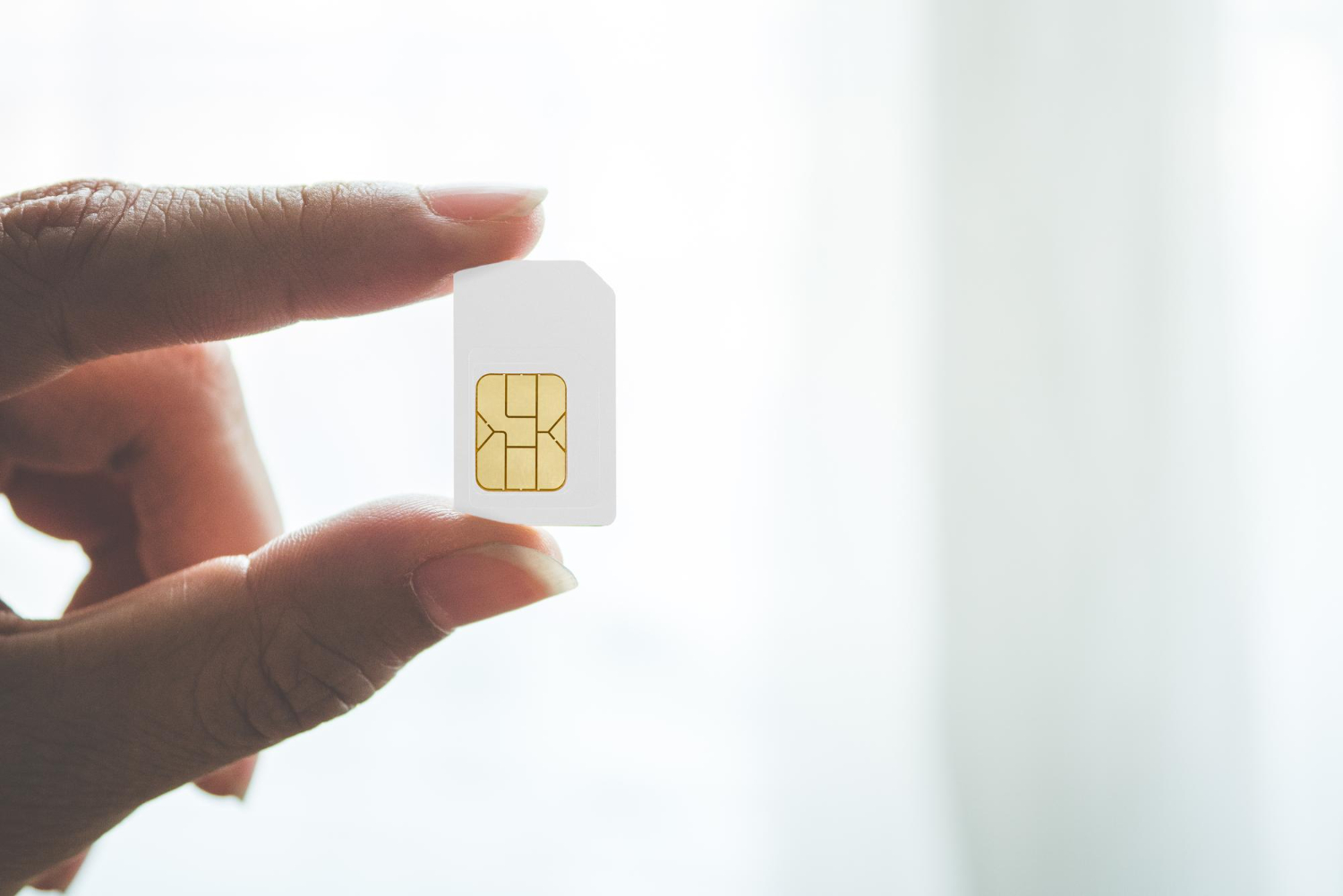
Staying connected while traveling is a smart choice, but not always straightforward. Between Wi-Fi, data plans, and roaming charges, it’s easy to get confused. Today, we’re expanding your horizons with a new alternative: the eSIM.
An eSIM is a digital SIM card directly integrated into your device, allowing you to connect instantly, at a lower cost, wherever you are in the world. But why choose an eSIM when nano SIMs already exist?
That’s where we come in. Discover in detail what differentiates the eSIM from the nano SIM and which solution is best suited to your needs.
The Evolution of the SIM Card
At the dawn of the mobile phone era, SIM cards were almost as large as bank cards, just like the devices themselves, which were bulky and cumbersome!
Since then, miniaturization has done its work: first with micro SIMs, then with nano SIMs, which are 40% smaller, and finally eSIMs, reduced to a tiny chip of just 2.5 mm x 2.3 mm.
Yet, despite this incredible size reduction, the basic technology remains unchanged. The SIM card remains a memory chip containing your user information, essential for accessing the mobile network.
In short, the smaller the SIM gets, the more space it frees up in your devices, allowing for example to integrate a more powerful battery or to design ever thinner and more elegant phones.
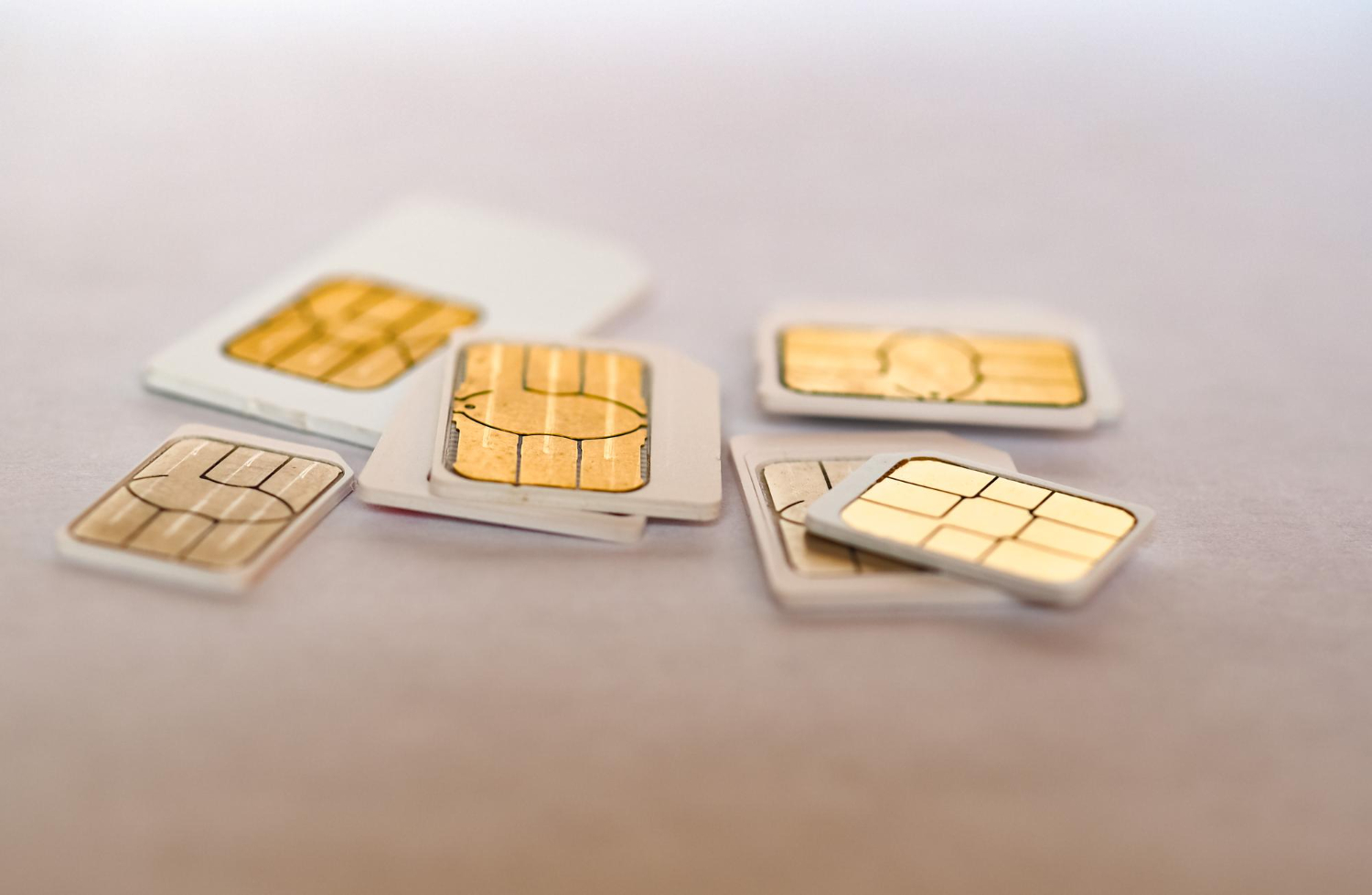
What is a nano SIM card?
Today, nano SIMs represent the most compact physical SIM card format on the market. They have become the essential standard, integrated into the majority of current smartphones.
However, there is no indication that this is the ultimate evolution of SIM cards as we know them today.
What is an eSIM?
The eSIM, on the other hand, pushes the boundaries of the traditional SIM card concept by eliminating the hardware constraint. Instead of inserting a card into a tray with a needle, the eSIM chip is directly integrated into the device. You then simply download your plan to connect to the network.
While some models still have a slot for a physical card in addition to the eSIM, many recent smartphones now rely solely on this integrated solution.
eSIM vs nano-SIM: More Similarities Than You Imagine
We often tend to pit classic SIM cards against eSIMs, as if they were incomparable. You might be surprised to learn that they share many common points:
- They connect your device to your mobile operator’s network.
- They are used on a multitude of devices, not just smartphones.
- They identify your phone and ensure the correct plan is applied.
- In a Dual SIM mobile, they work together.
- Ultimately, they are both… SIMs!
The distinction? The eSIM is directly integrated into the phone and downloads your plan remotely, whereas the classic nano-SIM requires a physical card. Beyond this difference, both technologies indeed fulfill a similar function.
eSIM vs. nano SIM: which is the better option?
It all depends on how you plan to use your smartphone. Before deciding, here’s a quick overview of each’s strengths.
Advantages of the nano SIM
Introduced in 2012, the nano SIM is now a proven standard. This longevity offers several advantages 👇:
- Easy to acquire : Present in almost all recent smartphones, the nano SIM is easily found, provided of course you remain vigilant against scams targeting travelers.
- Simplified transfer from one device to another : As long as your SIM card and phone are not locked, simply remove it and insert it into a new device. It’s that simple!
- Local number in a flash : Need a local phone number for calls and SMS during an overseas trip? Pop a nano SIM into your device and you’re all set.
Advantages of the eSIM
The eSIM revolutionizes your mobile experience: directly integrated into your smartphone, it eliminates the constraints of physical SIM cards. Changing operators becomes child’s play, and activating a new data plan is done in a few clicks. Some of these qualities👇:
- Unparalleled flexibility : Save up to 15 to 20 eSIM profiles on your phone and easily switch from one to another, depending on your needs or destinations.
- Keep your usual number : If your device is equipped with a dual SIM (physical + eSIM), continue to use your traditional number for calls. Otherwise, simply opt for WhatsApp, Telegram, or other messaging apps to stay reachable.
- Integrated regional plans : Some eSIM subscriptions offer you coverage in multiple countries. Perfect for travelers who want to stay connected without changing cards at every border.
- Impossible to lose : Unlike a physical SIM card, an eSIM remains stored on your phone’s chip. You no longer risk losing your plan or compromising your connection.
Enjoy the flexibility of Dual SIM with eSIM and nano-SIM

Did you know you can use an eSIM alone or combine it with a nano-SIM in the same phone? This combination, called Dual SIM, offers you unparalleled flexibility. There are two types of Dual SIM:
- Dual SIM Dual Standby (DSDS)
With DSDS mode, you simply choose which SIM card handles your calls and messages. When traveling, for example, you can keep your nano-SIM for rare SMS or calls (such as multi-factor authentication) while still using your eSIM’s data. - Dual SIM Dual Active (DSDA)
DSDA technology goes further: your eSIM and nano-SIM are both active simultaneously. This means you can receive calls and SMS on both your numbers and switch between operators in case of an unstable network. This solution is ideal for staying reachable on both a local and an international number. Be aware, however, that this increased versatility consumes more battery.
Ultimately, the key is to find the configuration that best suits your needs.